ES
Carbon fiber and graphite are not stone, but they are cut with diamond for the same reason: the material is abrasive and the cut has to be clean. The failure modes are different, though, and one of them — conductive dust — is a hazard that stone shops never think about.
Why diamond works here
Carbon fiber reinforced polymer is abrasive. The fibers wear a carbide edge quickly, and the resin matrix can smear under heat. A fine diamond grit cuts the fibers rather than pulling them, which reduces fraying at the cut edge.
Graphite is softer and more lubricious, but it is also abrasive and produces a very fine, very conductive dust.
Kerf and blade type
A thin kerf reduces material removal and cutting force, which matters on thin panels where delamination is the main risk. A continuous rim or a fine segmented rim with a high diamond concentration gives the cleanest edge.
A coarse blade tears fibers instead of cutting them. The result is a frayed edge that needs sealing and looks unfinished even after trimming.
Delamination
Delamination happens when the cutting force exceeds the bond between layers. It shows as a white or pale patch at the cut edge, and it cannot be repaired cosmetically.
The controls are support, sharp tooling, and low feed. Support the panel on both sides of the cut, use a backing board, and reduce feed as the blade exits. A dull blade is the most common cause, because the operator compensates with pressure.
Cutting direction and face side
Cut with the blade rotating into the face rather than away from it, so the fibers are pushed into the material rather than lifted. On a coated or gel-coated panel, cut from the face side to keep the visible edge clean.
Conductive dust
Carbon fiber and graphite dust conduct electricity. It can bridge across terminals, contaminate electronics, and short a motor. It also travels: the fine fraction stays airborne and settles on surfaces far from the cut.
Use dedicated extraction, keep the work area away from electrical panels and control cabinets, and clean with a vacuum rated for fine dust rather than compressed air. Water cutting is sometimes used in industrial settings, but water and carbon dust produce a slurry that is itself conductive and needs containment.
Common mistakes
- Cutting with a wood or metal blade and accepting a frayed edge.
- Pushing a dull blade to finish the cut.
- No support, so the panel flexes and delaminates at the exit.
- Using compressed air to clean up, spreading conductive dust.
- Cutting near electrical equipment without containment.
Tooling
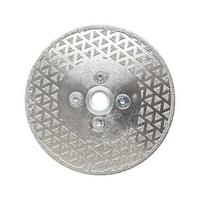
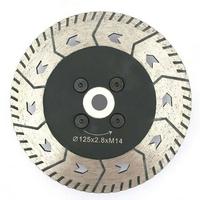
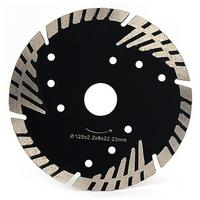
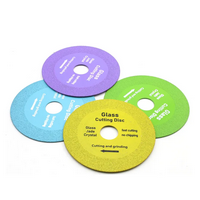
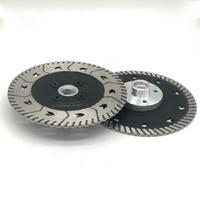
For the cut, the diamond saw blade category covers the blade types. A thin fine kerf blade suits composite panels, and a double sided cutting disc is useful where both faces need a clean edge.
Two related reads: thin blades for brittle materials, and diamond grit size explained.
Safety
Wear a respirator rated for fine particulate, eye protection, and gloves. Fibers are irritating to skin and eyes, and the dust is a respiratory and electrical hazard. Use extraction at the cut, keep the guard fitted, and match the blade's rpm rating to the machine. Isolate electrical equipment in the area or move the cutting outside it.
If you are cutting composite panels and need a blade specification for the thickness and fiber type, send the details and we will advise.