ES
A polished floor is not finished when the polisher leaves. It is maintained, and the maintenance step that preserves gloss is burnishing. Done on the right schedule it extends the interval between restorations; done on a dirty floor it grinds grit into the surface and makes things worse.
What a burnishing pad does
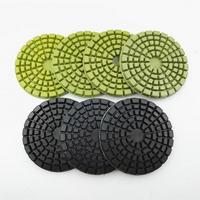
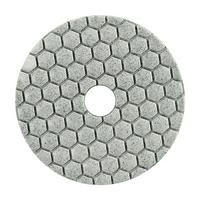
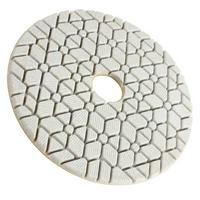
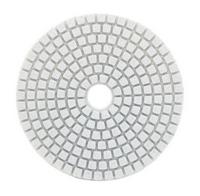
A diamond burnishing pad carries very fine diamond grit in a flexible matrix. Run dry on a high-speed burnisher, it refines the top few microns of the surface, restoring gloss without removing measurable material.
That is the key difference from a polishing pad: a polishing pad is part of a sequence that removes scratches, and a burnishing pad is a maintenance tool that re-establishes the finish on a surface that is already correct.
Machine speed and pad grit
Burnishers run at high rpm, and the pad's grit rating determines the result. Finer grit gives a higher, sharper gloss; coarser grit removes light scuffing but leaves a slightly softer finish.
Speed interacts with grit. Running a fine pad at maximum speed generates heat quickly, and on resin-rich surfaces that heat can soften the surface rather than polish it. A moderate speed with overlap is usually more consistent than maximum speed with fewer passes.
When to burnish
The schedule depends on traffic, not on the calendar. Retail floors may need nightly burnishing; an office lobby may need it weekly. The signal is visual: gloss drops in the traffic lanes first, and that is where maintenance should start.
Burnishing before cleaning is a wasted pass. Dust and grit on the surface act as an abrasive that scratches the finish and wears the pad prematurely.
Cleaning the pad
Pads load with dust and dried slurry. A loaded pad stops cutting and starts smearing. Most pads can be rinsed and dried, but a pad that has been used on a dirty floor may hold grit permanently and should be retired.
Rotate pads between machines so wear is even. A pad worn on one edge will keep producing an uneven finish until it is replaced.
Where burnishing is the wrong tool
- On a floor with visible scratches. Burnishing refines; it does not remove. Scratches need a polishing step.
- On an unsealed, porous surface. The pad loads and the finish stays patchy.
- On a wet floor. Water turns the dust into slurry and the pad smears it.
- On a floor with coating failure. Burnishing a peeling coating spreads the problem.
Maintenance program design
A workable program combines daily dust removal, periodic damp cleaning with a neutral cleaner, and burnishing at a frequency set by observation. Recording where gloss drops first lets you adjust frequency by zone instead of treating the whole floor on the same schedule.
Restoration is the reset: when burnishing no longer restores gloss, the floor needs a mechanical polish, not more passes.
Tooling
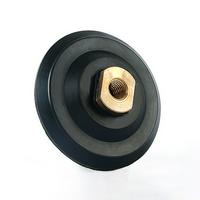
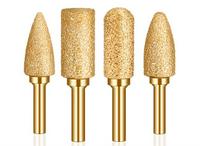
For maintenance work, the polishing tools category covers the pad options. A floor polishing pad handles the finer maintenance passes, and a flexible resin pad is useful around edges and on uneven surfaces.
Two related reads: resin bond discs for concrete floors, and avoiding swirl marks when polishing.
Safety
Burnishers are heavy and move quickly. Keep the cord or battery clear of the pad path, wear hearing protection and safety footwear, and never leave a running machine unattended. Dust from dry burnishing should be controlled with extraction or damp pre-cleaning, and operators should wear a respirator where silica-containing floors are being maintained.
If you are building a maintenance program and need pad grit recommendations for a specific floor, send the surface type and traffic pattern and we will advise.