ES
A cast concrete countertop is not a small floor. It is thin, it is visible from every angle including the edge, and it is usually the most scrutinised surface in the room. The polishing sequence is similar to a floor, but the tolerances are tighter and the densifier step has a narrow window.
Start from a flat, cured casting
Polishing cannot fix a casting that is out of flat or has voids at the surface. Fill voids before grinding, using a mix matched to the countertop, and allow it to cure. A void filled after polishing shows as a patch with a different sheen.
Curing time matters. Grinding a countertop too early exposes green concrete that polishes unevenly and can pull aggregate out of the surface. Follow the mix supplier's guidance rather than a fixed number of days.
The grit sequence
Coarse diamond tooling establishes flatness and removes the casting skin. Intermediate grits remove the coarse scratch, and fine resin grits develop the finish. On a countertop, the edge and the top should be taken through the same sequence so they read as one surface.
Because the area is small, operators tend to move quickly through the grits. That is where a scratch survives into the final finish. Check under raking light after each step, and do not advance until the previous pattern is gone.
Densifier timing
Densifier hardens the surface by reacting with free lime in the concrete. Applied too early, it sits on a surface that is still releasing water and produces a patchy, blotchy result. Applied too late, after the surface has been polished fine, it cannot penetrate and leaves a film.
The usual approach is to apply densifier after the mid-range grinding steps and before the fine polishing steps, on a clean, dry surface with the pores open. Confirm the specific product's instructions — some systems specify application earlier in the sequence, and the manufacturer's data sheet overrides general practice.
Remove excess densifier before it dries. Pooling in low spots is the main cause of a blotchy countertop.
Cream and slurry
Grinding produces a cream of cement and water that can dry into the pores and change the colour. Keep the surface wet-scrubbed between steps, and remove slurry before it sets. On a dark countertop, dried cream shows as a white haze that looks like a finishing defect.
Edges and undermount cutouts
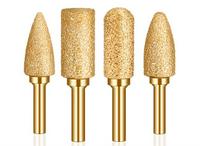
The edge is where the sequence is hardest to keep consistent. Use a hand tool with a drum or a profile pad, and take the edge through the same grits as the top. Check the transition under light from both above and below.
Cutouts follow the same logic as a stone sink opening: work the vertical face, protect the arris, and finish by hand where the tool cannot reach.
Sealing decisions
Concrete countertops are porous. A penetrating sealer reduces staining without changing the look; a topical coating adds sheen and wear resistance but can scratch. The choice depends on use — a kitchen counter and a bathroom vanity have different exposure.
Seal after the surface is fully dry and the densifier has cured. Sealing a damp countertop traps moisture and produces a cloudy patch.
Common mistakes
- Polishing before the casting has cured enough.
- Applying densifier on a wet or dusty surface.
- Skipping grits because the area is small.
- Leaving slurry to dry in the pores.
- Sealing too soon, or sealing a surface that still has densifier film.
Tooling
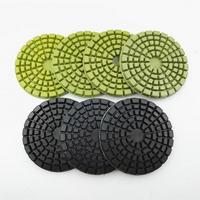
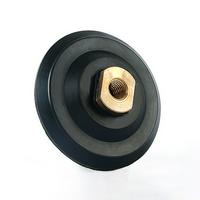
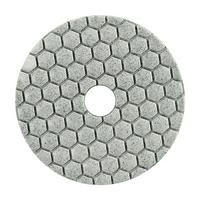
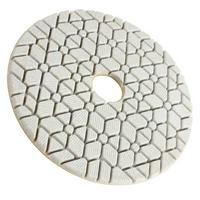
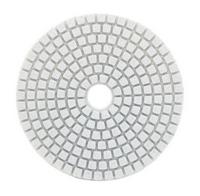
For countertop work, the polishing tools category covers pads and backers. A floor polishing pad works on the flat top, and a resin bond sanding disc handles the intermediate stages.
Two related reads: concrete floor preparation tools, and resin bond discs for concrete.
Safety
Cast concrete contains silica. Wet polishing controls dust; dry work needs extraction and a respirator. Wear eye protection, gloves, and hearing protection, use RCD protection on wet tools, and support the countertop so tool pressure does not crack an unsupported span.
If you are finishing cast countertops and need a pad and densifier sequence for your mix, send the mix type and target finish and we will confirm the steps.