
 ES
A supplier visit can be spent looking at finished products and leave you knowing very little. The useful questions are about how a blade is made and how the maker knows that today's batch matches the sample you tested. Those answers live in the production area and in the records, not in the sample room.
Follow the process in order
Walk from raw material to dispatch. For sintered or hot-pressed tools, look at how the diamond and bond powder are stored, weighed, and mixed; how segments are formed; and how the pressing and heat cycle is controlled and recorded. For brazed or laser-welded products, look at the joint preparation and the inspection that follows it. Ask what happens to a batch that falls outside the recorded parameters.
Then look at finishing: tensioning and flattening the steel core, balancing, and the final visual check. A maker who can explain which measurements are taken at each stage and show the records for a recent batch is giving you more useful information than one who only shows certificates on a wall.
Records worth asking for
- Batch identification. Can a finished blade be traced back to a powder lot, a pressing run, and a heat cycle?
- In-process measurements. Segment dimensions, hardness or density checks, and core flatness records.
- Calibration. When the scales, gauges, and temperature instruments were last checked.
- Nonconformance handling. What was rejected recently, why, and what changed afterwards.
- Change control. How a formulation or process change is communicated to customers.
The OEM specification guide covers what to agree before an order, and the wholesale buyer checklist covers the commercial side. An audit should confirm that the agreed specification can actually be held in production.
Reading the answer, not just the document
A folder can be assembled for a visit. Ask for records from an ordinary production day chosen at short notice, and compare them with the batch markings on blades in the warehouse. Ask a machine operator how a fault is reported. Consistency between the documents, the physical product, and what people say is the signal that matters.
After the visit
Write down what was observed, what was only claimed, and what needs a follow-up document. Agree the specification, the inspection method, and the change-notification route in writing. Then keep sample evaluation records from each shipment so a drift in the product shows up in data rather than in a disagreement.
When a visit is not possible
A structured desk review can cover part of the ground: process flow, batch records for two recent orders, calibration certificates, and a live video walk through the production area. Ask for the records first and the tour second, so the walk can be used to check what the documents claim. Note explicitly which observations were made remotely and remain unverified in person.
Tooling and safe practice
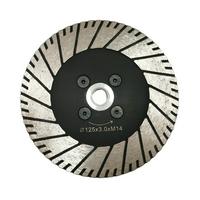
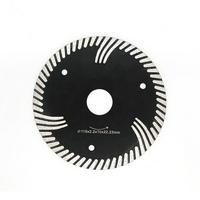
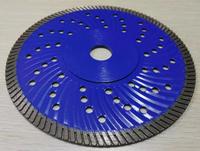
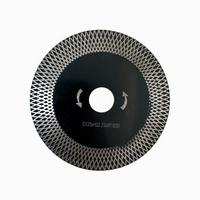
Browse the cutting disc category for the specifications worth fixing in an audit, using a double-sided disc or a segmented blade as a concrete reference item.
During any trial cutting, confirm rated rpm, keep the guard fitted, and wear eye protection and hearing protection. Maintain cooling or dust control and isolate tools before changing accessories.