
 ES
Experienced operators rarely look at the blade while cutting. They listen. A steady note means the segments are fracturing aggregate at the rate the bond is wearing; a change in that note is the earliest warning that feed pressure, tooling, or material has shifted.
Too much pressure
Leaning on a handheld saw feels productive for a short time. In practice it increases the load on each engaged segment, drives heat into the bond, and reduces the spindle speed. As speed falls the diamond rubs instead of cutting, which generates more heat still. The usual result is a darkened kerf, a dished or blued steel core, and a blade that has lost its tension.
Excess pressure also makes the blade follow the path of least resistance. On a long cut through variable aggregate, that shows up as a wavy line rather than a straight one.
Too little pressure
The opposite error is quieter and just as damaging. If the blade is held too lightly, the diamond does not bite; it polishes the surface of the aggregate and the bond does not wear back to expose fresh grit. The blade glazes over, the cut slows, and the operator then pushes harder into an already polished segment. The guide to why diamond blades glaze and how to dress them covers the recovery.
A healthy feed lets the tool's own weight and a light guiding hand do most of the work. On a horizontal cut the saw should feel like it is being steered rather than forced. On vertical work, support the tool so that its weight does not become uncontrolled feed.
What the sound means
- Steady, even note. Segments are cutting and the bond is wearing at a reasonable rate.
- Falling pitch with a smell of hot metal. Overload; withdraw, let the blade clear, and reduce feed.
- High-pitched ringing or chatter. Often a glazed blade, a loose flange, or a change to harder aggregate.
- Sudden change at one point in the cut. Reinforcement, a void, a denser aggregate pocket, or a change in slab thickness.
Holding a consistent feed
On a long cut, feed pressure drifts as the operator tires or as the tool's weight shifts with body position. A useful habit is to break the cut into short sections and reset the stance between them, rather than trying to hold one continuous pass. On vertical work, support the saw's weight so that gravity does not become uncontrolled feed.
Keep a mental note of the sound at the start and compare it after each section. If the note has changed but the material has not, suspect the blade before adjusting technique: a glazed segment, a loose flange, or a disc worn down in diameter will all alter how the same pressure feels.
Other causes that look like feed problems
Before adjusting technique, rule out the mechanical causes: a blade with the wrong bond for the aggregate, a worn arbor or dirty flange, a tool that cannot hold speed under load, and insufficient cooling or dust extraction. The diamond tool troubleshooting guide groups these by symptom.
Setup and safety
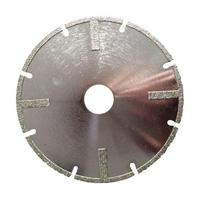
Choose a blade matched to the material from the cutting disc category. A double-sided cutting and grinding disc tolerates varied site work, while a tile-specific blade removes far less material and needs only light feed.
Keep the guard fitted, wear eye protection and hearing protection, and maintain dust control on dry cuts. Check rated rpm and the blade marking before starting, and isolate the tool before changing a disc.