ES
Polishing powder is often treated as a shortcut to gloss. Used in the right place it produces a depth of finish that pads struggle to match. Used too early it produces a waxy haze that disappears the first time the floor is cleaned.
Two different mechanisms
Diamond pads remove material. Each grit refines the scratch pattern left by the previous one, and gloss develops as the scratches get smaller than the wavelength of light.
Polishing powder works chemically as well as mechanically. Many marble powders are based on oxalic acid or similar compounds that react with calcium carbonate in the stone, producing a thin, hard, glossy layer at the surface. The reaction needs friction, a little water, and a surface fine enough for the reaction products to level.
Why order matters
Powder applied to a surface that still carries 200-grit scratches will fill and coat those scratches rather than remove them. The result looks glossy wet and patchy dry, and the gloss wears off unevenly under traffic.
The correct order is mechanical first: grind and hone with diamond until the surface is uniformly refined, then use powder to develop the final gloss. On a well-maintained floor, powder alone can refresh a finish that is already fine. On a worn floor, powder alone is a temporary cosmetic fix.
When pads alone are enough
Modern resin diamond pads in fine grits can produce a high gloss on marble without powder. The finish is more uniform and easier to reproduce, and it does not depend on a chemical reaction that varies with stone composition.
For large commercial floors where consistency across thousands of square meters matters more than the last few points of gloss, pads alone are often the better process. For restoration work where the client wants depth and warmth in the stone, powder is worth the extra step.
Granite is a different material
Powder formulated for marble relies on calcium carbonate. Granite does not contain it in the same form, so marble powder on granite produces smearing rather than gloss. Granite polishing uses different compounds and a different sequence.
This is the most common powder mistake on site: a crew trained on marble applies the same process to a granite countertop and cannot understand why the surface stays dull.
Working with powder
Apply a small amount, add water sparingly, and work it with a pad or a steel wool pad at moderate speed until it dries to a haze. Then buff clean. Too much water dilutes the reaction; too little burns it onto the surface.
Work in small areas — a couple of square meters at a time — so the powder does not dry before it has been worked. On vertical surfaces, work from the bottom up and keep the slurry off finished areas.
Common mistakes
- Powder on a surface that has not been honed fine enough.
- Powder on granite or on engineered quartz.
- Too much water, which turns the powder into a slurry that does not react.
- Working a large area and letting the powder dry before buffing.
- Judging the finish while the surface is still wet.
Tooling
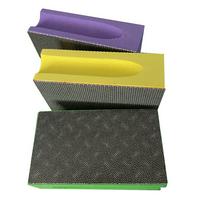
For the mechanical stages, the polishing tools category covers pads and backers. A diamond marble polishing pad handles the fine stages before powder, and a floor polishing pad covers larger areas on horizontal work.
Two related reads: polishing edges through the grit sequence, and polishing pad troubleshooting.
Safety
Polishing powders are chemical products. Read the label, use gloves and eye protection, ensure ventilation, and do not mix products. Keep powders out of reach of site visitors, and dispose of slurry according to local rules rather than washing it into drains.
If you are restoring a marble floor and are unsure whether pads or powder suit the stone, send a photo and the current finish and we will confirm the sequence.