ES
A first order with a new supplier is a test of process as much as product. The item that arrives late, in the wrong packaging, with the balance payment disputed, teaches you more about the supplier than the sample did.
What drives MOQ
Minimum order quantity usually reflects a setup cost. Segments are pressed and sintered in batches, brazing runs have a minimum load, and printed packaging has a print run. A supplier quoting a high MOQ is often quoting the point at which the setup cost stops dominating the unit price.
MOQ is also a risk control. A supplier who has never shipped to you will not want to build a small custom run that may never repeat.
The practical approach is to negotiate per item, not per order. A mixed order that reaches a total value threshold often gets a better MOQ position than a single-item order, because the setup costs are spread across more production.
How lead time is built
Lead time is a sum, not a single number: raw material or segment production, assembly or brazing, quality checks, packing, and handover to the forwarder. Each stage has its own queue.
Ask for the lead time broken down by stage. A supplier who can only give a total number either does not know their process or does not want to commit to the parts they cannot control.
Also confirm the start point. Lead time from deposit is different from lead time from order confirmation, and both are different from lead time from artwork approval.
Payment structures
Common structures are a deposit with the balance against documents, or a deposit with the balance before shipment. The split reflects who carries the risk at each stage.
A larger deposit usually buys a lower price, because the supplier is not financing the production. A smaller deposit shifts risk to the supplier, and that risk has a cost somewhere in the price.
For a first order, the balance of risk matters more than a small price difference. A structure that lets you inspect before the final payment is worth more than a discount.
Terms that should be written down
- Deposit percentage and the trigger for the balance.
- What documents are released against payment.
- Inspection rights before shipment.
- What happens if the delivery date slips.
- Which party bears storage costs if the shipment is delayed at destination.
Planning the first order
Start with the sizes that turn over fastest in your market, in quantities that will sell through in a reasonable period. A container of slow-moving diameters ties up capital and storage.
Leave room for a second order. A first order that consumes the whole budget leaves you unable to respond when the fast movers sell out.
Tooling references
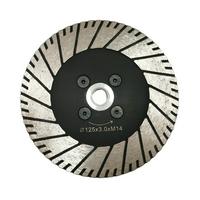
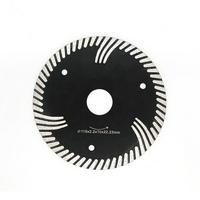
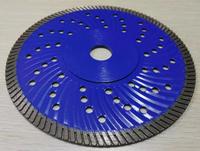
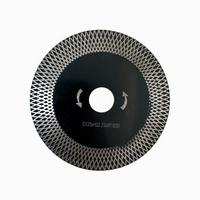
For item selection, the diamond saw blade category covers the blade range. A porcelain tile blade and a 100 mm diamond cup wheel are typical fast-moving items in a first order.
Two related reads: the wholesale import checklist, and OEM specifications to confirm.
Safety note
Commercial terms do not replace technical verification. Before the first shipment, confirm that the speed ratings and dimensions match the machines in your market, and that the packaging will protect the product in transit.
For MOQ and lead-time information on specific items, contact our team with your target quantities.