ES
Carving stone is a different operation from fabricating it. A fabricator wants a straight edge and a flat face. A carver wants to remove material selectively, follow a form, and stop at a surface that will take a finish. That changes which tool is right.
How the two cut
Carbide burrs and chisels cut by impact and shear. The edge bites into the stone and lifts a chip. That works well on softer stones — limestone, soapstone, alabaster, and many marbles — and it removes material quickly with a rotary tool or a hammer.
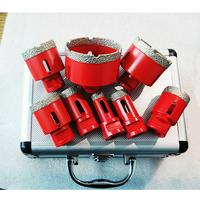
Diamond burrs and grinding heads cut by abrasion. Thousands of small scratches remove material rather than chips. That is slower per pass but works on hard stone such as granite, basalt, and quartz-bearing material, where a carbide edge would dull or break down.
Choosing by stone
- Soft and medium stone: carbide for rough shaping, diamond for detail and finishing.
- Hard stone: diamond for almost everything. Carbide edges wear too quickly and the impact can spall the surface.
- Mixed or unknown material: start with diamond. It is more forgiving across hardness ranges.
- Very fine detail: small diamond burrs hold shape and leave a cleaner recess than a carbide edge that has begun to dull.
Water changes everything
Diamond tooling on stone wants water: it cools the segment, controls dust, and keeps the cut from loading. A wet carving setup is cleaner and produces a better surface, but it requires drainage, a splash guard, and RCD protection.
Carbide work is usually dry, which is simpler but dustier. On silica-bearing stone, dry carving without extraction is a genuine health risk, not a comfort issue.
Tool shapes
Burr shape determines what the tool can reach. Ball burrs hollow and round, cylinder burrs flatten and square, cone burrs chamfer, and flame shapes blend. A carver needs a small set of shapes rather than many sizes of one shape.
Diamond burrs are made on a steel blank with abrasive bonded to the head. Once the abrasive is worn, the burr is finished — it cannot be sharpened. Carbide burrs can be resharpened, which changes the long-term cost comparison.
Surface finish
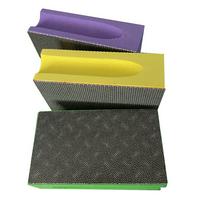
Carving leaves tool marks. Removing them is a separate sequence of finer burrs, then abrasive pads or brushes depending on the desired finish. A carved surface that will be polished needs the tool marks removed before polishing, or they show through the gloss.
Common mistakes
- Using wood-carving burrs on stone. The flutes are wrong and the tool overheats.
- Running diamond dry on hard stone and burning the bond.
- Using a large burr for fine detail because it is already mounted.
- Skipping the intermediate grits between carving and polishing.
- No dust control on a dry carbide setup.
Tooling
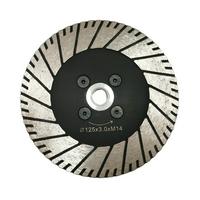
For the abrasive side, the grinding disc category covers the options. A bullet shaped vacuum brazed grinding head reaches into carved forms, and a 25 mm diamond resin drum wheel refines surfaces and edges.
Two related reads: diamond burrs and grinding heads, and flexible pads for curved surfaces.
Safety
Stone carving produces fine dust and sharp chips. Wear eye protection and a respirator, use water or extraction, and keep the workpiece clamped — a carving that moves under a burr can pull the tool into the hand. Wear gloves that allow control, and use RCD protection for wet tools.
If you are putting together a carving tool kit for a specific stone, send the material and the scale of work and we will suggest a set.