ES
A blade with a 22.23 mm bore will not sit correctly on a 20 mm or 16 mm spindle without a reducing ring. The ring looks like a trivial part, and it is the first thing to suspect when a new blade vibrates, wanders in the cut, or leaves a wider kerf than expected.
Bore size is not thread size
Confusion starts here. A bore is the hole through the blade centre, measured in millimetres. M14 and 5/8-11 are thread specifications for the spindle or the accessory itself, not bore diameters. A blade described as M14 usually has its own threaded hub and screws directly onto the spindle; a flat blade with a plain bore needs a flange and nut instead.
Check what you are holding before ordering an adapter. The M14 versus 5/8-11 compatibility guide explains the thread side; this article deals with plain-bore blades and the rings that adapt them.
Where runout comes from
A reducing ring has two tolerances that matter: the fit between its outside diameter and the blade bore, and the fit between its inside diameter and the spindle. Any clearance becomes eccentricity once the blade spins. At the rim, a small error at the bore is multiplied by the ratio of radii, which is why a 230 mm blade shows a wobble that a 115 mm blade on the same ring may not.
Three other causes produce the same symptom:
- Dirty seating faces. Concrete fines or a burr between blade, flange, and ring tilt the whole assembly.
- Wrong flange diameter. Flanges that are too small let the blade flex near the centre, and worn flanges no longer clamp flat.
- Stacked rings. Adapting 22.23 mm down to 16 mm with two thin rings stacked invites misalignment. A single machined ring is better.
Checking the assembly before the first cut
With the tool isolated, seat the ring fully and check that it does not stand proud of the blade face. If it does, the flange clamps on the ring instead of the blade, and the blade can slip under load. Spin the blade by hand and watch the rim against a fixed reference such as the guard edge. Visible lateral movement at no-load speed will become a much larger problem at rated rpm.
Then run the tool briefly in free air and listen. A steady hum is normal; a rhythmic tick or a repeating vibration points to eccentricity or a seating problem. Stop and correct it rather than letting the blade wear into an uneven pattern.
Material and condition of the ring
Steel rings hold their geometry better than soft aluminium ones, which can deform when the nut is overtightened. Replace a ring with a scored bore, a visible step worn by the spindle, or any sign of ovality. It is a low-cost part with a direct effect on cut quality and on the load placed in the spindle bearings.
Tighten the nut to the tool maker's torque guidance, not to the limit of the spanner. Over-tightening distorts the blade centre and can crack the steel core on thin-kerf products.
Choosing compatible accessories
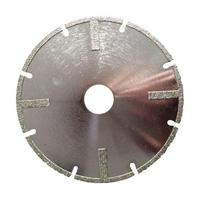
Where possible, buy blades that match the spindle you actually run, and treat rings as a workaround rather than a standard setup. Browse the cutting disc category for bore and flange specifications, or look at a double-sided cutting and grinding disc and a sintered turbo blade as examples of two different mounting styles. If speed and diameter also need reconciling, the rpm matching guide is the next stop.
Isolate the tool before fitting or removing a ring, keep the guard in place, and wear eye protection. Confirm the blade's maximum rated rpm against the tool before spinning it up, and never run a blade with a damaged or improvised adapter.