ES
Stone fabricators spend a lot of attention on the bit and very little on what holds it. That is backwards. A router bit spinning at working speed with a few hundredths of a millimetre of runout will wear unevenly, cut oversize, and leave a profile that needs hand work to correct.
What the holder has to do
A tool holder has three jobs: hold the bit on the machine's centreline, transmit torque without slipping, and stay balanced at operating speed. Every one of those is affected by the interface between holder and bit.
Stone CNC machines use a range of spindle interfaces. Some use an ISO taper with a pull stud; others use an ER collet chuck or a proprietary quick-change system. The first step is identifying which interface the machine actually has, because adapters between systems introduce exactly the error you are trying to avoid.
Taper and collet fit
A taper holds by surface contact. Dirt, a burr, or a dry fit reduces contact area and lets the holder sit off-centre. Clean the taper with a lint-free cloth before every change, and inspect for fretting marks that indicate the holder has been spinning in the spindle.
Collet chucks rely on the collet collapsing evenly around the shank. A worn collet, or one that is the wrong size for the shank, clamps on a line rather than a cylinder. That produces runout that increases with tool length.
Adapters: convenient and risky
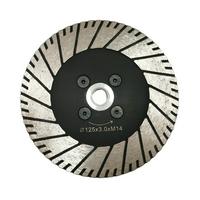
M14 is the thread used on most hand-held stone tools. CNC spindles rarely use it. The adapter that bridges the two is a common purchase because it lets a shop use one bit inventory across hand tools and the machine.
Each adapter adds two interfaces instead of one. A quality adapter with a ground face and a tight thread can be acceptable; a cheap one adds measurable runout and is often out of balance. On a profiling bit running at several thousand rpm, that imbalance shows up as vibration, a poor finish, and segment loss.
Balance and speed
Holders and adapters are balanced for a speed range. Running a holder above its rated speed, or fitting an unbalanced adapter, produces vibration that transfers into the segment and the spindle bearings.
If the machine has a spindle load meter, watch it during the first cut with a new holder. A load that fluctuates without a change in feed is a sign of imbalance or runout.
Coolant path
Many stone CNC machines deliver coolant through the spindle or through nozzles aimed at the tool. A holder with a through-coolant channel has to match the spindle's arrangement, or the coolant will bypass the cutting zone and the bit will run dry at the tip.
Check that coolant reaches the segment, not just the shank. On a profiling operation, the contact point is at the side of the tool, and nozzles aimed at the top of the bit often miss it.
Common mistakes
- Buying the least expensive adapter and wondering why profiles need hand finishing.
- Mixing holders between machines without checking the taper and pull stud.
- Over-tightening a collet nut, which distorts the collet and adds runout.
- Running a holder above its rated speed.
- Fitting a bit without cleaning the taper.
Tooling
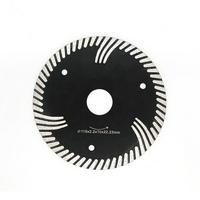
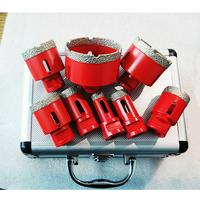
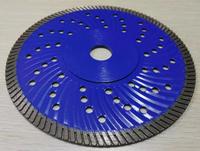
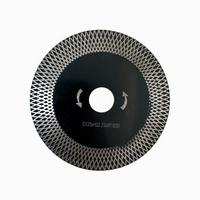
For the cutting end, the grinding disc category covers the profiling and grinding options. A vacuum brazed profile wheel is a typical CNC profiling tool, and an M14 finger bit covers the hand-tool side of the same work.
Two related reads: M14 versus CNC finger bits, and vacuum brazed router bits for edge profiling.
Safety
Isolate the machine before changing a holder. Wear eye protection and hearing protection, keep the enclosure closed during cutting, and never reach into the work zone to clear chips while the spindle is running. A tool that comes loose at speed is the most serious hazard in a stone shop.
If you are matching tooling to a CNC spindle and need to confirm the interface, send the machine model and spindle taper and we will advise.