ES
Winter cutting problems usually start before the blade turns: a frozen line, a stiff hose, a slab that has not gained strength on the expected schedule, or slurry that turns to ice across the work area. The diamond tooling is rarely the first thing to fail.
What changes in the material
Concrete gains strength more slowly at low temperature. A slab that would be ready to saw on a normal schedule may still be too soft, so the blade raveles the joint and pulls aggregate out of the edge. The green concrete cutting guide explains the timing decision; in cold weather that window has to be judged by the slab's condition and maturity rather than by the calendar.
Frozen free moisture in the surface behaves differently again. Cutting into a frozen layer can feel hard at first and then become soft and muddy as the material thaws under the water feed, which changes the load on the blade mid-cut.
Protecting the water system
- Drain at the end of every shift. Pumps, hoses, nozzles, and the saw's internal feed all hold water that can freeze and crack a housing or block a line.
- Keep hoses short and insulated. Long exposed runs lose heat fast and stiffen enough to pull on the tool.
- Check flow before the blade enters the cut. A partially blocked nozzle is hard to notice until the blade is already hot.
- Plan the runoff. Slurry that freezes on a walkway becomes a slip hazard; contain and remove it rather than letting it spread.
- Store blades dry. Condensation on a steel core during freeze-thaw cycles is a corrosion risk in storage.
The water cooling guide for core drilling covers supply checks that apply equally to saws and rigs in cold conditions.
Tool and operator factors
Lubricants thicken, batteries deliver less runtime, and extension leads become stiff and harder to route. Gloves thick enough for the weather reduce fine control of the feed, which is another reason to use a guided saw or a stand-mounted rig rather than a freehand tool on precision work. Allow a short warm-up period for the machine, and check that the coolant or water is flowing freely before committing to a full-depth pass.
Starting the shift
A short pre-start check pays for itself in cold weather: water flowing at the nozzle, hoses flexible rather than stiff, the pump drained of ice, the blade free of condensation, and the slab surface clear of frost. Run a short test cut in a non-critical area before committing to a joint line, because the first few seconds reveal whether the material is frozen at the surface or uniformly cured.
Choosing tooling and working safely
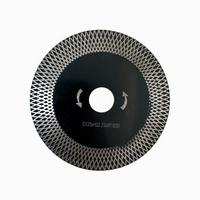
Select a blade for the actual condition of the slab, not the intended mix design, and favour staged passes when the material is variable. Browse the diamond saw blade category for options: a segmented general-purpose blade suits softer early-age concrete, while a sintered turbo blade handles denser cured sections.
Use an RCD-protected supply for wet work, wear eye protection, hearing protection, and insulated gloves, and keep the guard fitted. Confirm rated rpm and isolate the tool before clearing a frozen nozzle or changing a blade.