
 ES
Stone CNC machines run on water. It cools the segment, flushes the kerf, and carries away cuttings. When the coolant system is neglected, the tool is the first thing to fail and the last thing operators suspect, because the water is still running.
What the coolant has to do
Three jobs, in order of importance: keep the segment below the temperature where the bond softens, remove cuttings from the cutting zone, and keep the machine's sliding surfaces clear of abrasive slurry.
A flow that looks adequate at the nozzle can be inadequate at the cut. Nozzles clog, pumps wear, and filters load. The result is a tool running hot while the operator sees water going somewhere near the work.
Nozzle aim
Aim at the contact point, not at the tool body. On a profiling operation the contact is at the side of the wheel, often under the workpiece, which is exactly where a fixed nozzle does not point.
Check by running the machine with the tool clear of the stone and watching where the water lands. Adjust until the stream hits the segment, then check again after the first cut.
Flow and pressure
Flow matters more than pressure. A high-pressure jet that misses the cut is worse than a low-pressure stream that floods it. Look for a steady, visible return of slurry from the cut; if the return slows, the cut is packing.
On deep cuts or large diameters, increase flow rather than pressure. Pressure increases splash and mist without improving cooling at the segment.
Filtration
Recirculating systems carry slurry back to a tank. If the filter is not maintained, the pump sends abrasive particles through the system, and those particles wear the pump, the seals, and the nozzle.
Check the filter on a schedule rather than when flow drops. A clogged filter is a slow failure that shows up as a glazed tool weeks later.
Water quality and additives
Hard water leaves scale in the lines and on the machine. Where hardness is high, a softener or a different water source reduces maintenance.
Rust inhibitors and flocculants are available for recirculating systems. They help the machine, but they change the slurry's behaviour and may not suit every disposal route. Check local requirements before adding anything to the tank.
Spindle cooling is separate
Many stone CNC spindles are cooled by a separate chiller circuit. That circuit has its own coolant, its own level, and its own maintenance interval. Confusing spindle cooling with cutting coolant is a common mistake: the spindle can be cool while the tool is running dry.
Common failures
- Glazed segments: insufficient flow at the contact point.
- Blocked nozzles: scale or slurry, usually after a period of low use.
- Pump wear: abrasive slurry circulating because the filter was bypassed.
- Corrosion: water left in the lines between jobs.
- Slurry on guideways: wiper seals worn, leading to premature linear bearing failure.
Tooling
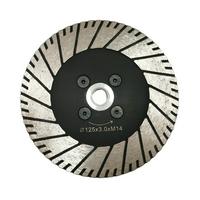
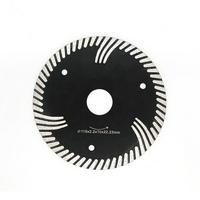
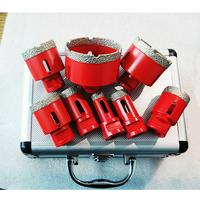
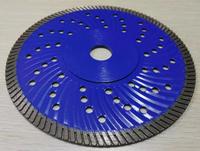
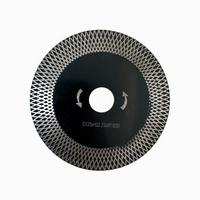
Coolant protects the cutting tool, so the grinding disc category is the place to match tool to machine. A vacuum brazed profile wheel and an M14 finger bit both depend on coolant reaching the segment.
Two related reads: water cooling for core drilling, and heat buildup in diamond cutting.
Safety
Water and electricity share a machine here. Check earth leakage protection, keep cabinet doors closed, and never open a control cabinet while the machine is powered. Wear eye protection against splash and a respirator where mist carries silica. Clean spills before they become slip hazards.
If you are troubleshooting short tool life on a CNC machine, send the coolant setup and tool specification and we will help narrow down the cause.