
 ES
A diamond blade is a thin steel disc with a brittle abrasive rim. It survives cutting because the load is distributed around the rim. It does not survive a carton collapsing in a container, a pallet stacked on its edge, or a week of condensation in a humid hold.
What damages blades in transit
Four mechanisms account for most damage: bending from point loads, chipping where blades contact each other, corrosion from condensation, and deformation from cartons crushed under stacking weight.
Each has a packaging answer, and the answers interact. A carton that is strong enough to resist stacking but has no moisture barrier lets rust form. A moisture barrier with no rigidity lets the blades bend inside a sealed bag.
Inner packing
Individual blades are usually packed in a sleeve or a blister, then grouped in an inner box. The inner box does the work of keeping blades apart. Loose blades in a carton will chip each other's rims within a few hundred kilometres of road transport.
For large diameters, a blade should be supported at the bore and at the rim rather than lying flat under its own weight. A vertical rack or a shaped insert does this; a flat carton does not.
Carton construction
Corrugated board grade should match the stacking load, not the product value. A carton that is adequate for a pallet at the bottom of a stack is not adequate for the same carton at the top with a tonne above it.
Check the compression strength with the supplier and confirm the stacking pattern used at the warehouse. Most crushed cartons are the result of a pattern the packing list never anticipated.
Moisture control
Sea freight crosses climate zones. A container that is warm and humid at loading can condense moisture on cold steel as it cools at sea. The result is rust on the blade body, which is a cosmetic complaint but also a real one for distributors selling to contractors.
Options include a vapour barrier bag with desiccant, coated paper interleaves, and a light oil film on unpainted bodies. Which one is appropriate depends on the destination climate and the storage conditions after arrival.
Container loading
Weight distribution matters. Heavy cartons at the bottom, lighter cartons on top, and the load secured so it cannot shift in a seaway. A container that is half full needs dunnage or lashing; cargo that can move will move.
Leave access for inspection at the door. A load packed tight to the doors makes a customs inspection a full unload.
Marks and labels
Cartons should carry the item code, quantity, dimensions, gross and net weight, and any handling marks. A carton that only carries a supplier's internal code creates work at every handover.
Where the buyer has a private label, the outer carton usually carries the buyer's mark and the inner packaging carries the product branding. Confirm which is which before the print run.
Common mistakes
- Packing blades loose in a carton to save inner boxes.
- No desiccant on a long sea route.
- Stacking cartons beyond their compression rating.
- Loading heavy items on top because they fit better.
- Outer marks that do not match the packing list.
Tooling references
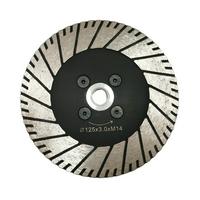
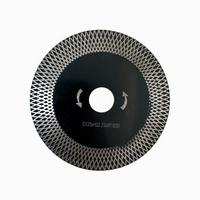
Packaging decisions depend on the product, so start from the diamond saw blade category. A porcelain tile blade and a 115/125 mm turbo mesh blade illustrate the range of diameters and weights that affect carton design.
Two related reads: storage and transport tips, and the wholesale import checklist.
Safety note
Damaged packaging is a safety issue, not just a cost issue. A blade with a bent body or a chipped rim should not be put into service. Inspect on receipt and quarantine damaged items before they reach a workshop shelf.
If you are planning packaging for a mixed container, send the item list and destination and we will advise on carton and moisture protection options.