
 ES
Pool coping is stonework with three jobs at once: it has to follow a curve, shed water away from the pool, and feel safe under a wet foot. That combination makes it one of the more demanding edge applications, and one where a small error is visible from the water.
Cutting the curve
Coping follows the pool's radius, and a radius is not something a straight blade produces cleanly. On gentle curves, a series of straight cuts with a slight overlap approximates the arc, then the edge is refined with a grinder. On tight radii, a ring saw or a narrower blade gives more control.
Mark the curve on the back of the stone, not the face. Cutting from the back keeps the visible surface protected and reduces the chance of a chip on the finish side.
Profiling the edge
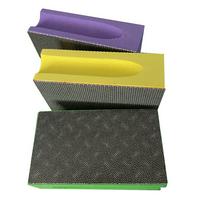
Most coping uses a bullnose or a softened edge so there is no sharp arris at shin height. A profile wheel forms the shape; hand pads refine the transition to the face and to the underside.
Keep the profile consistent around the whole pool. Variation between pieces shows up when the water is still, because the eye follows the edge line.
Slip resistance
A polished bullnose is not a safe pool edge. Most specifications call for a honed, brushed, or flamed finish on the walking surface. That finish has to be produced deliberately, not left as an artefact of the cutting process.
On granite, a brushed or flamed finish is common. On limestone and sandstone, a honed finish with a light brush is typical. On porcelain coping, the factory finish is usually already suitable and should not be polished away.
Water and slurry around a pool
Cutting next to a filled pool means slurry can enter the water. Contain it: use a tray, a wet vacuum, and a barrier, and work away from the pool where possible. Slurry that settles on the pool floor is difficult to remove and visible from the surface.
Use fresh water for wet cutting rather than pool water. Pool water carries chlorine and salts that can affect the slurry and the tool.
Joints and movement
Coping sits on a bond beam that moves with temperature and ground conditions. Joints between pieces and at corners need to accommodate that movement; a rigid joint will crack, and the crack will be visible at the waterline.
Leave the specified joint width and fill it with the specified sealant. Stone that is butted tight looks better on day one and fails sooner.
Common mistakes
- Cutting from the finished face and chipping the edge.
- Polishing the walking surface and losing slip resistance.
- Allowing slurry into the pool.
- Inconsistent profile between pieces.
- Butting pieces tight with no movement joint.
Tooling
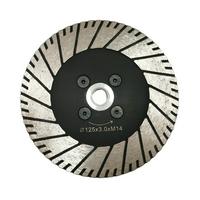
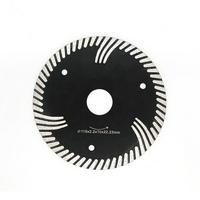
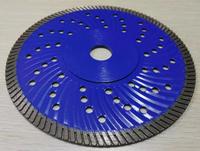
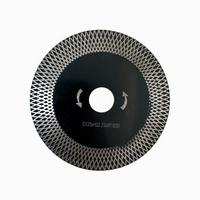
For the work, the cutting disc category covers the blades. A turbo cutting disc handles the straight and gentle curve cuts, and a 75 mm profile wheel forms the bullnose.
Two related reads: beveling stone edges, and the countertop installer tool kit for the hand tools around the edge.
Safety
Water and electricity near a pool is the primary hazard. Use RCD protection, keep cords out of the water, and never work with a tool plugged into an unprotected circuit. Wear eye protection, hearing protection, and non-slip footwear, and keep the work area clear of slurry that makes the coping slippery before it is even installed.
If you are cutting coping for a specific pool radius and profile, send the dimensions and stone type and we will confirm the blade and wheel.