ES
Private label sounds like a branding exercise. In practice it is a manufacturing project with a print run attached, and most of the delays come from artwork and specification, not from the product.
What changes when it becomes private label
The blade itself may be unchanged. What changes is the marking on the blade, the inner packaging, the outer carton, and the documentation. Each of those has its own specification and its own approval step.
A private label order without a written specification per component is an order that will be reworked at least once.
Dielines and print
Packaging artwork has to fit a dieline, which is the cutting and folding pattern for the specific box. A designer working from a photograph will produce artwork that does not fit.
Ask the supplier for the dieline of the intended box before design starts, and design to the bleed and safety margins. Text that sits inside a fold disappears.
Print method matters for cost and for appearance. Flexo printing is economical at volume; digital printing suits short runs but has a higher unit cost. The choice sets the minimum quantity.
Mandatory markings
Blades sold into regulated markets carry required information: maximum speed, dimensions, and identification of the manufacturer or the responsible party. Private label does not remove those requirements — it changes who is responsible for them.
Confirm with the supplier which markings are applied to the blade and which appear only on the packaging, and check that the arrangement satisfies your market's requirements. A blade that carries only a brand name and no speed rating is a problem regardless of how good the packaging looks.
Barcodes and traceability
Retail distribution usually requires a barcode on the unit packaging, and increasingly a batch or date code for traceability. A batch code is also what makes a warranty claim on a specific production run possible.
Decide the coding scheme before the print run. Adding a code after printing means a sticker, and stickers fall off in a warehouse.
Print quantities
Packaging has a minimum print run, and that minimum is often higher than the blade order. A small blade order can end up with years of packaging, which then has to be stored and may become obsolete if the design changes.
Balance the per-unit saving of a larger print run against the risk of holding inventory. For a first private label order, a smaller print run at a higher unit cost is often the better decision.
Where private label orders stall
- Artwork not supplied to the dieline, requiring redesign.
- Colour approval by screen, which does not match print.
- Missing mandatory markings, discovered at pre-shipment inspection.
- Barcode not registered for the retail channel.
- Language requirements for the destination market not confirmed.
Tooling references
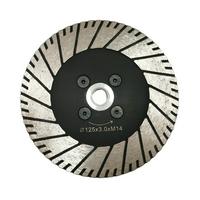
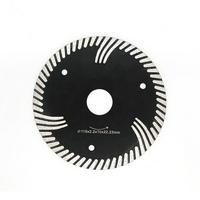
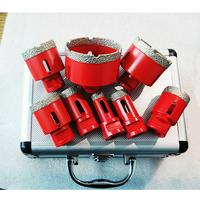
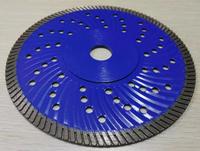
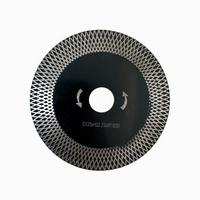
For the products involved, the diamond saw blade category covers the blade range. A porcelain tile blade and an M14 hole saw kit in a case show how differently packaging can be specified across items.
Two related reads: OEM specifications to confirm, and reading blade labels and markings.
Safety note
Private label shifts responsibility for user information. The packaging has to carry the same safety information the original would have carried: rated speed, intended use, and the precautions for the application. Branding that displaces safety information is a liability, not a design choice.
If you are planning a private label range and need packaging and marking specifications, contact our team with the target market and item list.