
 ES
Cutting granite well does not mean cutting sandstone well. Granite is dense and hard; sandstone and many limestones are open, friable, and held together by a comparatively weak cement. The blade removes material easily, and the edge falls apart anyway.
Raveling is the main failure
Raveling is the crumbling of grains along the cut edge. It comes from the mechanical shock of the segments, from vibration in a poorly supported piece, and from the water jet washing loose grains out of a fresh kerf. It is rarely a sharpness problem, which is why fitting a more aggressive blade often makes it worse.
Some limestones are also chemically sensitive. Acidic cleaners, certain curing compounds, and prolonged wetting can mark the surface near the cut, so keep slurry moving away from the finished face and clean with a pH-neutral product.
Bond and segment choices
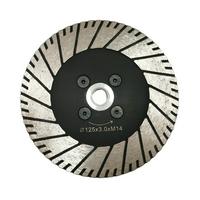
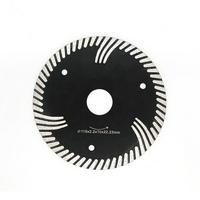
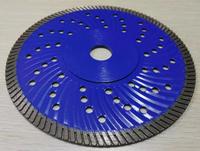
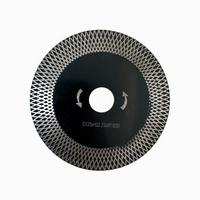
Soft, abrasive stone wears a bond back quickly, so a harder bond usually holds its diamond longer here than it would in dense granite. A continuous or fine turbo rim gives a smoother edge than widely spaced segments, which strike the material in pulses. Thin-kerf blades remove less material and reduce the force transmitted into a fragile edge.
The bond matrix explainer describes why bond hardness is matched to abrasiveness rather than to stone hardness alone. The troubleshooting guide covers chipping and edge damage across other materials.
Support matters as much as tooling
- Full-length backing. Support the stone close to the cut line on both sides; an overhanging end vibrates and breaks out.
- Sacrificial strip. A waste piece clamped against the exit face keeps the last grains from tearing away.
- Score pass first. A shallow initial cut establishes a clean line before the full-depth pass.
- Controlled water. Enough to cool the segment, not a high-pressure jet aimed at the fresh edge.
- Let the blade work. Forcing the feed on soft stone tends to pluck grains rather than shear them.
Checking the stone before cutting
Not all sandstone is equally friable. Tap a corner, rub the surface with a thumb, and look at how much loose grain comes away. A piece that sheds grains freely needs more support and a gentler feed than a denser bed from the same quarry.
Cut one sample from the batch before committing to the visible pieces, particularly where the work includes a long run of matching edges. Colour and grain direction vary between beds, and a blade setting that leaves a clean edge on one slab can ravel the next.
Finishing after the cut
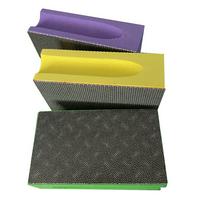
Plan for a light refinement stage rather than expecting a saw-cut edge to be the final surface. A hand pad or a small profiling tool can clean up an arris without removing much material. Where the piece is part of a visible run, cut one sample first and agree the edge quality before cutting the batch, because stone from different beds in the same quarry can vary considerably.
Tooling and site practice
Browse the diamond saw blade category for continuous-rim and fine turbo options. A general circular cutting disc suits rougher dimension work, while a fine-rim tile cutting blade is useful for thin limestone tiles and small-format pieces.
Clamp the workpiece, keep the guard fitted, and wear eye protection and hearing protection. Maintain dust control on dry cuts, use an RCD-protected supply for wet work, and confirm the blade's rated rpm before starting.