ES
Most stockouts in a diamond tool warehouse are not about blades. They are about backing pads, arbor adapters, extension bars, and the one core bit diameter that a contractor needs tomorrow. Those items are cheap, easy to overlook, and able to stop a job that involves an expensive tool.
Split the range by behaviour, not by value
Fast-moving consumables such as cutting discs and polishing pads need a reorder point driven by actual issue rate. Slow-moving large-diameter core bits may be better held in small quantities with a clear replenishment route from the supplier. Accessories that only sell attached to a tool, such as backer pads and reducing rings, should be reviewed together with the tool they support rather than as independent lines.
Seasonality matters too. Floor preparation work, outdoor cutting, and renovation cycles do not peak at the same time, and a single annual average hides the weeks when a particular grit or diameter moves quickly. The wholesale buyer checklist covers the purchasing side; the question here is what happens after the goods arrive.
Setting a workable reorder point
- Use issues, not sales orders. A large one-off order distorts the picture; actual movement off the shelf is the signal.
- Account for lead time variability. A nominal lead time with wide variation needs more cover than a slightly longer but reliable one.
- Group by specification. Two blades of the same diameter but different bond are not interchangeable stock.
- Watch the tails. A single slow line may still be worth holding if it unblocks a key customer, but that should be a decision, not an accident.
- Review quarterly. Remove lines that have stopped moving and add the new diameters customers are actually asking for.
Storage affects what you can sell
Polishing pads and resin-bond tools dislike damp, heat, and compression. Blades stored leaning in a stack can distort at the core, and loose reducing rings migrate between bins. The storage and transport guide covers the physical conditions. Keep stock rotation visible so older batches move first, and mark anything that has been returned from site as inspection stock rather than putting it straight back on the shelf.
Practical product examples
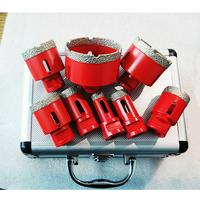
A hole saw kit is a good example of a line where the case, the bits, and the adapters all need separate stock visibility, because losing one adapter makes the kit unsellable. Similarly, larger core bits are worth tracking by diameter rather than as a single group.
Browse the diamond drill bit category when building the specification list, and keep the catalogue structure consistent with the bin labels.
Returns and inspection stock
Keep a separate, clearly marked area for goods returned from site and for anything held pending a claim. Returned blades and pads should not re-enter saleable stock until they have been inspected for flatness, core damage, and contamination. Mixing them with new goods is a common source of a complaint that is then very hard to trace back to its origin.
Safe practice
When issuing tooling to customers or crews, confirm the accessory's rated rpm against the machine, keep the guard fitted, and wear eye protection and hearing protection during any demonstration cutting. Isolate tools before changing accessories and retire any blade with a damaged core.