
 ES
The steel blank is the structural part of a diamond blade. Segments can wear down and be dressed; the core cannot. Once it cracks, the blade leaves service, and the useful work is understanding why it happened so the next one does not follow.
Where cracks start
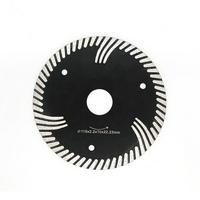
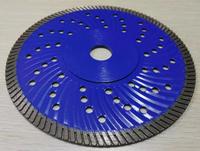
Most cracks begin at a stress concentration: the root of a segment slot, the arbor hole, a keyway, or a laser weld. These are the points where the repeated bending load of a cut is highest. A crack that runs radially outward from a slot is typical of fatigue from repeated side loading. A crack starting at the bore is more often associated with a distorted flange, an oversized or worn arbor, or over-tightening.
Heat changes the picture. A blade that has been run hot can lose its tension, becoming dished even without a visible crack. Once out of plane, it wobbles, and the wobble then creates the bending cycles that start a crack. The two failure modes feed each other, which is why a blade with a heat-discoloured centre deserves the same scrutiny as one with a visible line.
Inspecting before each shift
- Clean the blade first. Slurry hides fine lines, especially around the slots.
- Use good light and rotate slowly. Look at both faces and at the slot roots.
- Check flatness. Lay the blade on a known flat surface or sight the rim against a straightedge.
- Check the bore. Look for elongation, burrs, and any bright rubbing mark from a loose flange.
- Record and segregate. A rejected blade should be marked so it cannot be picked up again by mistake.
The guide to retirement criteria covers the same decision for core bits and cup wheels, where the failure signs differ but the principle is identical.
Why repair is not an option
Welding a slot, drilling a stop hole, or grinding a crack back changes the heat treatment and the tension of the blank. At rated rpm the stress around that area is far higher than it appears at rest. A blade with any crack, a damaged bore, or a visible loss of tension should be discarded rather than returned to service for a light job.
Causes that can be corrected
Trace the incident back to the machine and the setup: runout in the spindle, a mismatched reducing ring, a blade run above its rated speed, a deep single pass in dense material, or a cut where the workpiece moved and pinched the blade. The angle grinder safety checklist covers the machine-side checks. Fixing a cause on the machine is usually cheaper than replacing blades on a recurring basis.
Tooling and safe practice
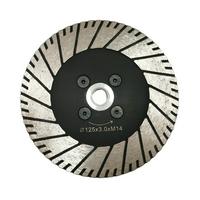
Select blades with a core and slot design suited to the duty from the cutting disc category. A double-sided cutting and grinding disc and a segmented concrete blade carry different core geometries and should not be judged against the same wear pattern.
Isolate the tool before fitting or inspecting a blade, keep the guard fitted, and wear eye protection, a face shield, and hearing protection. Confirm rated rpm before starting and never run a blade with a suspect core.