ES
Wet cutting fails in two opposite ways. Too little water lets the segment overheat and the steel core lose tension. Too much water, delivered to the wrong place, throws slurry across the work area without ever reaching the contact zone. Getting the water to the cut is the whole job.
What the water is doing
Water cools the segment, flushes swarf out of the kerf, and suppresses airborne dust. All three depend on flow at the blade edge, not on the volume leaving the tap. A hose aimed vaguely at the top of the blade can look generous while the lower half of the cut runs dry.
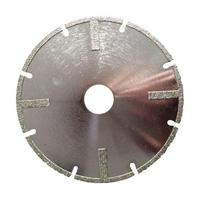
Flow should rise with blade diameter and cut depth, because both increase the contact arc and the amount of material being removed. A narrow tile blade needs a modest, well-directed trickle; a 125 mm concrete cutting blade in a deep pass needs more, and a sintered turbo blade in dense material more again. The guide to heat buildup in diamond cutting describes what happens when cooling falls short.
Three ways to supply it
- Gravity or a handheld bottle. Adequate for short, shallow cuts and small tiles. Flow falls as the container empties, and there is no warning before it stops.
- Mains or hose connection. Steady flow, but pressure varies with the site supply and with whatever else is running. A simple valve and flow indicator make the setup repeatable.
- Pumped recirculating or tank system. Needed where there is no supply, and useful on saws that run continuously. Check pump capacity at the required head height, not just its free-flow rating.
Nozzle placement
Two small nozzles aimed at each side of the blade, close to where the segments enter the material, work better than one large jet at the top. The aim is to wet both faces of the blade and carry fines out of the kerf. On a stand-mounted saw, check the nozzles after every blade change; a nudged nozzle is a common cause of an otherwise unexplained burn mark.
Managing what comes out
Slurry is a disposal issue before it is a tooling issue. A containment tray, a settling route, and a wet vacuum keep it off walkways and out of drains. The wet cutting slurry management guide covers collection and handling in more detail. On cold sites, drain the pump and lines at the end of the shift so that frozen water does not crack the housing or leave the next operator with a blocked feed.
Electrical and operating checks
Water and mains power together require an RCD-protected supply and a tool rated for wet use. Route the hose so it cannot catch the blade or pull the tool out of the operator's hands, and check that the water is flowing before the blade touches the material. Review the diamond saw blade category for blades rated for wet cutting, and the safety checklist for guard and PPE requirements.
Wear eye protection, hearing protection, and waterproof gloves, keep the guard fitted, and isolate the tool before changing a blade or clearing a blocked nozzle.