ES
Coring a 150 mm wall is routine. Coring a 600 mm foundation is a different job, because every extension you add amplifies runout, and every extra 100 mm of depth makes it harder for water to reach the segment and for slurry to get out.
What an extension does to accuracy
An extension rod threads between the bit and the drill spindle. Each joint introduces a small amount of play, and that play is multiplied by the length of the assembly. A bit that runs true at 200 mm can wobble noticeably at 600 mm.
Use the shortest extension that reaches the depth. Stacking three short extensions because they were on the shelf is worse than one long rod, because there are more joints to accumulate error.
Check the assembly for straightness by spinning it slowly before the bit enters the hole. A visible wobble at the bit means a bent rod or a badly seated thread, and it will produce an oversized hole.
Water and slurry at depth
Water has to reach the segment face and slurry has to leave. In a deep hole, both become harder. The gap between the bit and the hole wall is the return path, and once it fills with cuttings, water stops reaching the segment.
Signs that the hole is packing: the water return slows, the motor note changes, and the bit starts to bind. Stop, withdraw, and flush before continuing. Pushing through a packed hole is how bits get stuck.
Coring in stages
On deep holes, core in sections. Drill to a comfortable depth, break off the core, remove it, and continue. This keeps the barrel from filling with a long core that is difficult to break out and reduces the friction between the core and the barrel wall.
Breaking the core is easier with a core breaker or a chisel through the hole than by levering the bit sideways. Sideways force on a deep bit is how barrels bend.
Bit choice for depth
Deeper holes favour bits with good clearance and a segment that clears cuttings rather than smearing them. A turbo or segmented rim with open gullets tends to clear better than a closed rim at depth, though a closed rim gives a cleaner hole entry.
Barrel length matters too. A barrel that is only slightly longer than the target depth leaves no room for the core to break cleanly. Match barrel length to the section plus a margin.
Where deep coring goes wrong
- Binding at depth: slurry packing, misalignment, or a worn bit that has lost its clearance.
- Oversized hole: accumulated runout from too many extensions.
- Stuck bit: usually a combination of packing and heat. Withdraw early rather than late.
- Break-out damage: drilling through without reducing pressure at the exit face.
Tooling
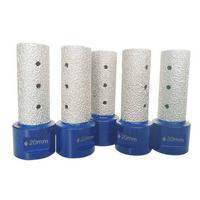
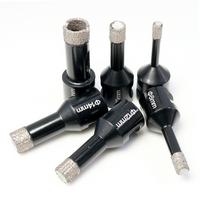
Start from the diamond drill bit category. A vacuum brazed core bit covers general work, and an M14 sintered core bit suits smaller diameters in deep sections.
Two related reads: choosing drill bit sizes, and water cooling for core drilling.
Safety
A long bit assembly is a lever. If it binds, the rig can rotate or the stand can lift. Anchor the stand, keep the mast clamp tight, and stand clear of the rotation path. Wear eye protection, hearing protection, and gloves, and use RCD protection with wet coring.
If you are coring through a thick section and need to plan barrel length and extensions, send the depth, diameter, and material and we will confirm the setup.