ES
A floor can leave the grinder looking even and uniform, then develop pale, cloudy patches a day later. The first assumption is usually leftover dust. Often it is not: water moving through the slab has carried dissolved salts to the surface and left them behind as it evaporated.
Three different white marks
Efflorescence is crystalline salt deposited by moisture migrating through concrete. It tends to appear in patches that follow wet areas, joints, or the edge of the slab, and it can return after cleaning until the moisture source is addressed. Grinding residue is fine powder left in the open surface because the floor was not vacuumed thoroughly before a densifier or sealer was applied; it wipes away and does not return once cleaned. Densifier bloom is a chemical residue from over-application or from product that was not worked in evenly; it often follows the pass pattern of the applicator.
Telling them apart matters because the remedies are opposite. Residue is a cleaning problem. Bloom is an application problem. Efflorescence is a moisture problem, and polishing over it traps the condition rather than solving it.
Where to look first
- Moisture source. A missing vapour barrier, a leaking joint, recent washing, or an unsealed external edge.
- Drying conditions. Poor ventilation and low temperature slow evaporation and extend the period in which salts can migrate.
- Timing of chemicals. Densifier and sealer applied before the slab has been cleared can lock in a patchy appearance.
- Cleanup between stages. Fine grinding dust left in the surface profile is easily mistaken for a chemical deposit.
The surface profile guide explains how the degree of grinding affects what a coating can bond to, and the concrete countertop polishing guide covers where densifier sits in a finishing sequence.
Confirming before treatment
Clean a small test area, dry it fully, and watch it for a day or two. A deposit that returns is being fed by moisture. Check the slab's moisture condition before any further finishing work rather than adding another chemical layer. Where the source is a leak or a missing barrier, that has to be corrected first; repeated cleaning and resealing will keep failing at the same spots.
Before the next stage
Do not rush to seal a floor that has shown white patches. Mark the affected areas on a simple plan, note the date and the weather, and recheck them after a drying period. If the same zones return, the moisture path is still active and a further finishing pass will have to be repeated. A short delay at this point is cheaper than removing a cured sealer from a large area.
Tooling and site practice
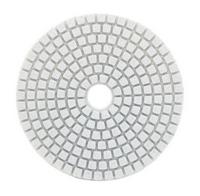
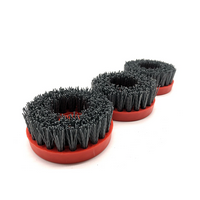
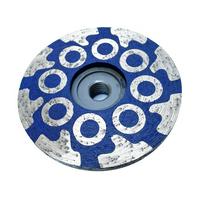
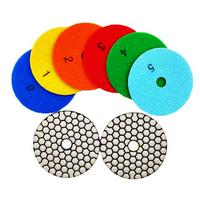
Use diamond floor grinding blocks for the preparation stage and a resin bond sanding disc for refinement, with thorough vacuuming between grits. The grinding tools category lists holders and grit ranges by machine.
Keep dust control working on every pass, wear eye protection and a respirator rated for the exposure, and use hearing protection during machine work. Isolate equipment before changing tooling and confirm rated rpm on each disc.