ES
When a buyer in Europe asks about blade safety, the conversation usually lands on two references: EN 13236 and the oSa mark. Both are worth understanding, and both are frequently misunderstood in supplier correspondence.
What EN 13236 covers
EN 13236 is a European standard for safety requirements relating to diamond tools — superabrasive products with a diamond or cubic boron nitride working part. It addresses things like maximum permissible speed, marking, and the information that has to accompany the tool.
It is a product safety standard, not a performance standard. It does not tell you how long a blade will last or how well it cuts. It tells you what the tool has to be designed and marked to withstand, and what the user has to be told.
What the oSa mark indicates
oSa is a mark used in the abrasive industry, associated with a trade body that publishes safety guidance for bonded abrasives and diamond tools. A blade carrying the mark indicates the manufacturer participates in that system and follows its safety recommendations.
It is not a substitute for a test report, and it does not mean a blade suits every machine. It is one signal among several.
The marking questions that matter
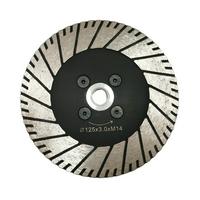
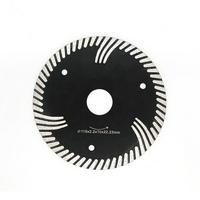
Look at the blade itself. A properly marked diamond blade carries information the operator needs: maximum speed, dimensions, and a traceable manufacturer identifier. If those are missing or only on the packaging, ask why.
- What maximum speed is marked, and in what unit — rpm or m/s?
- Is the marking laser-etched, printed, or only on the label?
- Does the marking survive the life of the blade, or wear off in the first hour?
- Which standard does the supplier declare the blade is manufactured against?
- Can the supplier provide a declaration of conformity, and for which product range?
Questions about the declaration
A declaration is only meaningful if it names the product range and the standard. A generic statement covering "all our diamond tools" is a marketing document, not a technical one.
Ask for the document that covers the specific item you are buying, and check that the dimensions and speed rating match the blade you receive.
What buyers get wrong
The common mistake is treating a marking as a performance claim. A blade can be correctly marked and still be a poor match for your material, your machine, or your operators.
The second mistake is accepting a scanned certificate with no product identification. A document that cannot be tied to a batch is not evidence of anything.
The third is assuming the marking requirements are the same in every market. They are not, and a blade supplied for one market may not carry the markings required in another.
How to structure the conversation
Send the supplier your target market, the machine types the blade will run on, and the materials it will cut. Ask for the marking specification and the declaration that covers those items. Then check the first shipment against the sample.
If a supplier cannot answer a marking question clearly, that is useful information about how they will handle a claim later.
Tooling references
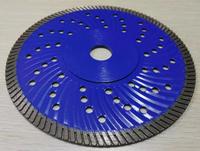
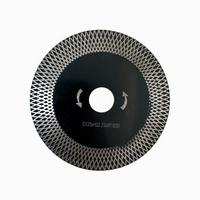
For product context, the diamond saw blade category lists the blade types involved. A general purpose diamond blade and a hot-pressed turbo mesh blade are useful examples of the marking points above.
Two related reads: reading blade labels and markings, and quality inspection for diamond tools.
Safety note
Marking and conformity questions exist because diamond blades fail at speed. Whatever the paperwork says, the user still has to match the blade's rated speed to the machine, fit the guard, and follow the manufacturer's instructions. Nobody should run a blade whose speed rating cannot be confirmed.
If you need the marking and specification details for a specific product range, contact our team and we will confirm what is available for that item.