ES
A corridor in a hospital and a production bay in a cleanroom both need a floor that is easy to clean, resists staining, and does not shed dust. That shifts the emphasis of a polishing job away from gloss and toward surface continuity, joints, and the control of the work itself.
What the finish has to do
An open or heavily scratched surface holds soil and makes disinfection unreliable. The polishing sequence has to refine the scratch pattern fully at every stage, and any pinholes, cracks, or open joints need to be treated before the final finish. A high gloss reading is not evidence of cleanability; a dense, well-refined surface under raking light is a better indicator. The honed versus polished comparison explains why a lower-sheen finish is sometimes the specified result.
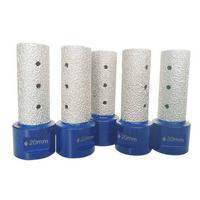
Junctions matter more than the field of the floor. Coving, drainage channels, door thresholds, and the interface with other finishes are where contamination collects. Plan the edge work and the small pads before starting, not as a final touch-up.
Junctions and coving
Decide early how the floor finish meets the wall and any coved detail. Small pads and hand tools are needed there, and the sequence has to be compatible with the main field so the junction does not show a different texture. Where a drainage channel is present, protect it during grinding and clean it out before handover; debris left inside is difficult to remove later.
Controlling the work in a sensitive area
- Isolate the zone. Dust, slurry, and noise must not reach adjacent clinical or production areas.
- Use wet methods with containment or dry methods with extraction sized for the machine and a suitable filter.
- Plan the water and slurry route. Nothing should enter a floor drain that is part of a controlled system without approval.
- Control access. Materials, hoses, and cables need a defined route that does not cross clean corridors.
- Document the cleaning handover. Residue left after polishing looks like a finish failure on day one.
The dust control guide covers the extraction principles that apply when dry methods are used, including the fine fraction that stays airborne.
Verification before handover
Agree the acceptance criteria in advance: surface appearance under defined lighting, gloss range if one is specified, and the condition of joints and edges. Inspect after a full clean and dry, because polishing residue can mask both haze and open porosity. Keep a test panel from the same sequence so the maintenance team has a reference for later cleaning trials.
Handover documentation
Give the facilities team the pad sequence, the products used, and the cleaning agents that are compatible with the finish. A maintenance contractor who reaches for an unsuitable cleaner can undo a careful polish in a single shift. Include the test panel reference and the agreed inspection lighting so later assessments are comparable.
Tooling and safe practice
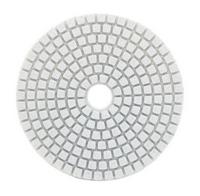
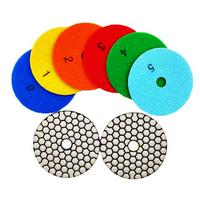
Browse the polishing tools category for pad sequences. A three-step hybrid pad reduces the number of stages in a sensitive area, and a floor polishing pad covers the refinement passes on the main field.
Wear eye protection, hearing protection, and a respirator rated for the exposure, use an RCD-protected supply for wet work, and confirm the pad's rated rpm against the machine. Isolate equipment before changing tooling.