
 ES
Granite punishes the wrong blade in a way softer stone does not. It is dense, highly abrasive and unforgiving of heat, so the rim of the blade - the only part that touches the stone - decides whether a cut comes out fast, clean and cool, or slow, chipped and burnt. Turbo rim and continuous rim blades sit at opposite ends of that trade-off, so the useful question is not which one is better, but which one matches the way you are cutting granite.
What the rim actually does
A diamond blade does not slice stone like a knife. Diamond grit on the rim grinds the material away, and a metal bond holds that grit until it wears back and exposes fresh diamond. Rim design controls two things: how freely the blade clears the slurry and heat it creates, and how much diamond touches the stone at any moment.
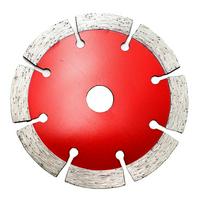
- Turbo rim: the cutting band is broken by angled slots. Those slots throw debris out of the kerf and let air or water reach the cut, so the blade runs cooler and removes material aggressively. A turbo cutting and grinding disc is a typical example of this layout.
- Continuous rim: the band is solid, with a thin, even layer of diamond around the full circumference. More grit touches the stone at once, producing a smoother, more controlled cut and a cleaner edge.
Both rims are sintered onto a steel core, and the core must stay flat. If it flexes, the rim wanders and the edge suffers no matter which rim you chose.
Where a turbo rim wins on granite
On granite a turbo rim is the faster tool. The slotted band clears the heavy slurry granite produces, keeps water or air moving through the kerf, and holds up better on thick slabs and long straight runs. Sizing slabs, cutting to rough dimension or working material that will be profiled later are all jobs where the extra aggression pays off.
The cost is edge quality. A turbo rim leaves a slightly rougher cut and is more likely to chip the exit edge on veined material. That is fine when the edge will be polished, but it is a problem when the cut itself is the finished edge.
Where a continuous rim wins
When the cut is the finished edge, a continuous rim is the better choice. More diamond contacts the stone at once and there are no open slots to interrupt the cut, so the kerf is smoother, edge chipping is reduced and dimensional control is tighter. On granite this matters for visible edges, tight joins and any cut that will not be hidden by a joint.
The trade-off runs the other way. A continuous rim clears debris less freely and heats faster if the feed is too light or the water flow too low. On hard granite the bond can glaze over, and a glazed blade stops cutting and starts rubbing the stone instead. That is one of the common faults covered in diamond tool troubleshooting.
Granite-specific points that matter more than the rim
Rim design only delivers if the rest of the setup is right. Three factors matter as much as the rim:
- Bond hardness. Granite is abrasive, so it wears diamond away quickly. A bond that is too hard will not release dull grit and glazes; one that is too soft wears out before the diamond is spent.
- Segment height. Knowing how much usable diamond depth is left tells you how much cutting life remains. Segment height is worth checking before a large job rather than mid-cut.
- RPM. Every blade has a maximum rated RPM, and a larger blade must turn slower to keep the rim speed within limits. Matching RPM ratings to the tool is a safety limit, not just tuning.
How to choose
- Rough sizing, finishing later, thick slab or long runs: turbo rim.
- A visible or finished edge, tight tolerances, veined granite: continuous rim.
- Both on one job: rough out with turbo, then make the final edge cut with continuous.
- Whatever the rim, confirm the blade is rated for your tool and plan for water feed or dust control on granite.
Most granite work starts from a diamond saw blade range, so it pays to check blade type against the finish before you buy.
Safety essentials
Granite cutting throws fine dust and fragmenting debris. Fit the guard, wear eye protection and a dust mask, and use water feed or extraction where possible. Clamp the slab so it cannot shift, inspect the blade for cracks before mounting, and follow the manufacturer's instructions for both tool and blade. Never exceed the rated RPM marked on the blade, and let the blade reach full speed before it touches the stone.
If the rim decision still feels close, start from your available method - wet or dry cutting plus the finish you need - and pick the rim that matches. Rim choice, bond, RPM and cooling together decide how a granite blade really performs.