ES
Marble looks soft next to granite, but it is one of the more heat-sensitive stones you can cut. Calcite and dolomite scorch, discolour and even spall when a blade runs hot, so the real question behind wet versus dry cutting marble is not speed - it is how much heat the blade and the stone can take before the edge is ruined.
Why marble punishes heat
Marble is a metamorphic stone built from calcite or dolomite crystals. Those crystals are softer than the quartz in granite, but they are sensitive to temperature. A dry blade that keeps cutting after the kerf has heated up can leave a burnt, whitish or dull look along the cut, and on lighter marbles that discolouration can run below the surface. Heat also stresses the blade: it softens the bond, speeds up diamond loss and can warp a thin core.
Wet cutting: how it changes the cut
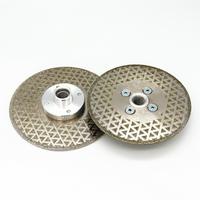
Wet cutting feeds water directly into the kerf. The water does three jobs at once: it cools the blade and the stone, it carries slurry out of the cut, and it binds the fine dust before it becomes airborne. On marble that combination protects the edge finish and keeps the blade cool enough to run a thinner, more precise disc. Visible edges, book-matched joints and any cut that will be polished afterwards are all wet-cutting jobs. A wet setup is also what keeps a thin marble cutting disc from overheating, because a thin electroplated blade has little metal to absorb heat on its own.
Dry cutting: when it is acceptable
Dry cutting is a real option, but it is a method for rough work, small jobs or sites where water is impractical. It suits fast sizing cuts, cuts that will be trimmed again, and outdoor work with dust extraction. It does not suit a finished visible edge on marble, deep cuts in hard stone or long continuous runs. If you dry cut, use a blade rated for dry use, take light passes, let the blade cool between them and never force it.
Blade differences between wet and dry use
- Wet blades are often thinner with a finer diamond layer, because water handles the cooling and the slurry. They cut fast and leave a smooth edge on marble.
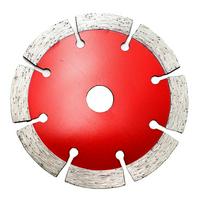
- Dry blades are built to survive heat: laser-welded or heat-treated segments and wider gullets that throw debris clear and let air reach the cut.
- Bond and grit are matched to the stone. A blade tuned for hard granite can feel dull on marble, while a marble blade on granite burns out quickly.
If you are unsure which build you have, the markings on the blade say a lot. Reading blade labels for the wet/dry rating and maximum RPM avoids using the wrong blade for the method.
Mixing methods on one job
Many fabricators dry cut the first rough sizing pass to avoid handling water, then switch to wet for the final dimension and edge cuts. That works as long as the rough pass stays well oversize and the wet blade makes the cut that matters. Do not run a wet-only blade dry simply because it is already mounted on the grinder.
Safety and dust control
Dry marble cutting produces fine respirable dust, and wet cutting produces slurry that becomes a slip hazard if it is not managed. Either way, wear eye protection and a dust mask, fit the guard, clamp the workpiece, and keep the blade within its rated RPM. Follow the manufacturer's instructions for the tool, and decide how you will handle slurry management before you start.
Selection checklist
- Finished visible edge or a cut that will be polished: wet.
- Rough sizing, trim later, or no water on site: dry with extraction.
- Confirm the blade is rated for the method and for your tool's RPM.
- Match bond and grit to marble rather than reusing a granite blade.
- Keep the feed steady and never let the blade sit in one spot.
To see how water, RPM and blade type interact, read matching RPM ratings and browse the wider cutting disc range.
The simple rule: wet cutting protects a marble edge, and dry cutting is for work you will cut again. Pick the method from the finish you need, then choose a blade built for that method.