ES
A 115 mm blade and a 230 mm blade on the same spindle do not present diamond grit to the work at the same speed. The spindle figure is identical; the distance each segment travels in one revolution is not. That is why blade markings quote a maximum peripheral speed in metres per second rather than just a maximum rpm.
The calculation
Peripheral speed is the circumference of the blade multiplied by revolutions per second: v = π × D × n / 60, with D in metres and n in rpm. A 115 mm blade at 11,000 rpm runs at roughly 66 m/s. Put a 230 mm blade on that spindle and the rim is doing about 132 m/s, even though the tool has not changed.
This is the arithmetic behind the rule that larger blades need lower spindle speeds. It also explains why a blade approved for a small grinder can be out of its design range on a larger machine with the same rated rpm.
Why the bond cares
Diamond cutting is a grinding process at the segment face. At a suitable rim speed, the bond wears back at a rate that keeps exposing fresh diamond. Run too fast in a hard, dense material and the interface overheats, the metal matrix softens, and the segment can lose tension or shed grit. Run too slowly and the diamond does not fracture the aggregate efficiently; the blade rubs, glazes, and stops cutting.
Material changes the target as well. Hard, fine-grained stone generally suits a lower peripheral speed with a softer bond, while abrasive materials such as green concrete or asphalt suit a harder bond and can tolerate a different speed band. The bond matrix explainer sets out that relationship.
Reading the marking
Blade labels usually carry a maximum operating speed and a maximum rpm. Both are limits, not targets. Check the tool's rated rpm against the blade's rpm figure, then check the computed rim speed against the m/s figure. The guide to diamond blade markings walks through the other symbols on the label, and the rpm matching guide covers the same calculation for cup wheels and core bits.
Where it goes wrong on site
- Adapter-driven upsizing. Fitting a larger blade to a machine built for a small one raises rim speed and side load at the same time.
- Assuming all blades in a size are alike. A thin continuous-rim tile disc and a segmented concrete blade of the same diameter have different design speeds.
- Ignoring wear. As a blade wears down in diameter, rim speed falls. On long production runs this slowly moves the process out of its best band.
- Compressing to cut faster. Extra feed pressure does not change rim speed, but it does increase heat at the interface.
Choosing and using the blade
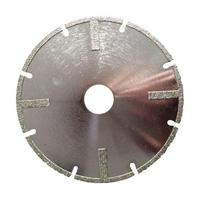
Start with the material and the depth of cut, then select a diameter the tool is built to carry. In the diamond saw blade category, a 125 mm general-purpose blade and a larger circular cutting disc sit in different speed bands, which is exactly why the tool choice has to follow the blade rather than the other way round.
Keep the guard fitted, confirm both the rpm and m/s markings before spinning up, and wear eye protection and hearing protection. Isolate the tool before changing a blade, and let the blade reach speed before it enters the cut.